All you need to know for a better night’s sleep
Good sleep is one of the most powerful (and underestimated) foundations of health.
It affects everything from mood, focus, and energy to immune function, metabolism, and long-term disease risk.
Yet for many people, a good night’s sleep feels frustratingly out of reach.
If you struggle to fall asleep, wake during the night, or feel unrefreshed in the morning, you’re not alone — and the good news is that sleep can often be improved with the right strategies.
This article brings together practical, evidence-based tips to help you sleep better. These build on our earlier discussion about how sleep works and why it matters (if you haven’t read this yet, you can do so here
Everyone’s sleep is influenced by different factors, so think of this as a toolkit: the more tools you have, the easier it is to find what works for you.
What does “good sleep” actually look like?
In general, healthy sleep means:
- Falling asleep within about 30 minutes
- Sleeping through the night without frequent or prolonged awakenings
- Not being awake for more than 30 minutes total overnight
- Waking feeling reasonably refreshed
- Being able to function well during the day without significant sleepiness
If this doesn’t describe your sleep most nights, the strategies below can help.
Optimise your sleep environment:
Your brain forms strong associations with places.
When your bedroom is used only for sleep (and intimacy), it becomes a powerful cue for rest.
Try this:
- Keep the bedroom for sleep only — avoid working, studying, or scrolling in bed
- Remove screens from the bedroom where possible
- Set a “screens off” time at least one hour before bed and use a simple alarm clock instead
- If you find yourself clock-watching, turn the clock around so you can’t see the time
- If you can’t fall asleep within ~20 minutes, get out of bed and do something quiet and relaxing (reading, gentle stretching, music).
- Return to bed once sleepy. This helps prevent your brain linking the bed with frustration or anxiety.
- If noise is an issue, white noise apps or earplugs can also be helpful
Temperature matters more than you think:
As we fall asleep, our core body temperature drops slightly, while blood is diverted to our limbs — a process supported by melatonin.
Helpful strategies to support this include:
- A warm shower or bath before bed
- Wearing socks or having a warm (non-caffeinated) drink
- Keeping the bedroom cool with light bedding
- Using a fan or opening a window if needed
These are especially useful if you experience night sweats or hot flushes.

Move your body (at the right time):
Regular physical activity improves sleep quality, particularly deep sleep.
Any type of movement helps — consistency matters more than intensity
Exercising outdoors in the morning adds the benefit of natural light exposure to help regulate circadian rhythm (body clock) – even a 20-minute morning walk can improve sleep that night!
Try to avoid vigorous exercise close to bedtime, as it stimulates stress hormones. Gentle stretching or yoga in the evening is a better option.
Use light to your advantage
Light is the strongest regulator of our circadian rhythm (body clock) , its what our brain relies on to set our body clock and keep it running well.
During the day, try to get outside early (ideally within 30 minutes of waking) — outdoor light is up to 500 times brighter than indoor light. If you can’t get outdoors, sitting next to a window with natural light is also a good option.
When the days are short or you have to get up well before sunrise, using LED blue lights (around 480 nm wavelength) can be a good option for boosting alertness and supporting your body clock.
Morning light is key for setting up better sleep later in the day – regulating your sleep at night starts the moment you wake!
In the evening, use these strategies in reverse:
- Dim lights at least 2 hours before bed
- Avoid screens for at least 1 hour before bed
- Use blue-light filters or blue-light-blocking glasses if needed
- If possible, switch to warmer or amber lighting in the evening, and avoid bright overhead cool lights after sunset.
Blue light from screens strongly suppresses melatonin and can delay sleep onset and reduce sleep quality.
If you do wake during the night, keep lights as dim as possible to minimise disturbance to your sleep.
Be mindful of caffeine
Caffeine can stay in your system much longer than you realise – it takes about 6 hours for caffeine levels to halve!
Try to limit caffeine to earlier in the day (at least 8–10 hours before bed); and aim for no more than 2–3 cups per day.
If you’re sensitive to caffeine and struggling with sleep, consider cutting it out completely, or switching to decaf.
Rethink daytime naps
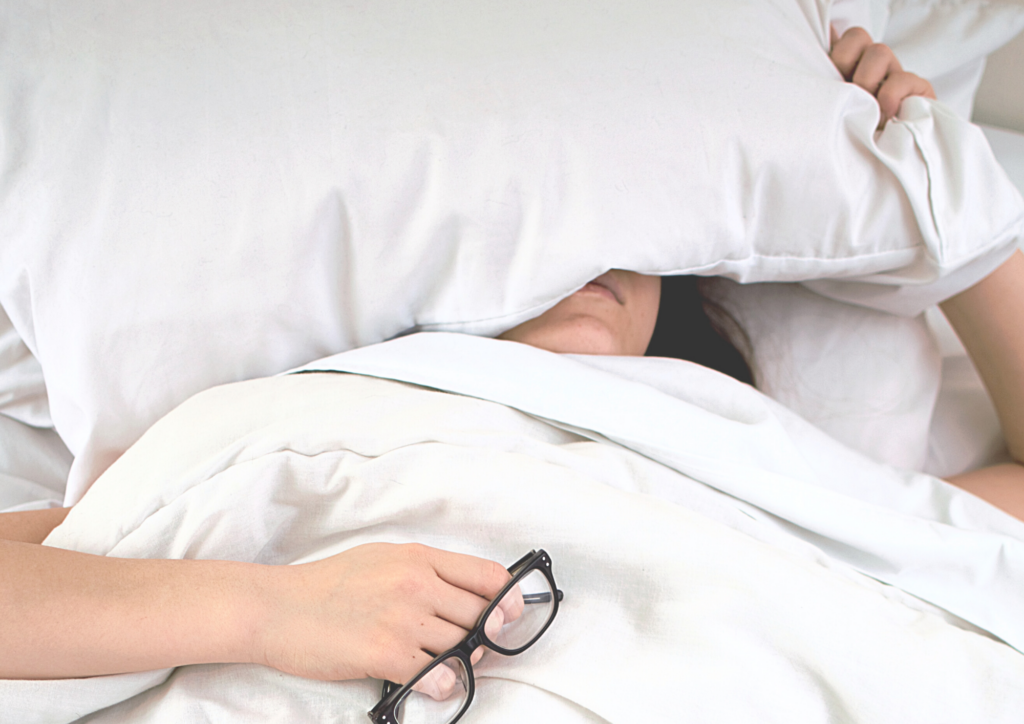
While naps can be tempting, they can interfere with nighttime sleep, by reducing levels of adenosine (the hormone that makes us feel sleepy the longer we are awake).
If you must nap, limit it to one nap of 30 minutes or less; nap before mid-afternoon; and keep your bedtime consistent, even after a nap
Alcohol and nicotine: less is better
Even small amounts of alcohol in the evening reduce sleep quality, fragment sleep, and increase night awakenings.
Ideally avoid alcohol within 3 hours of bedtime – the less evening alcohol, the better your sleep. If you don’t believe us, try tracking your sleep with a wearable – you will be surprised at how much impact it has on sleep quality!
Nicotine is also a stimulant. If quitting isn’t possible yet, avoid smoking in the late afternoon and evening.
Eat for better sleep
Diet quality influences sleep more than many people realise.
A whole-food diet rich in fruits, vegetables, and complex carbohydrates supports better sleep
Foods high in magnesium (leafy greens, nuts, seeds) may help
Avoid high-sugar or high-fat foods close to bedtime
Heavy or rich meals can worsen reflux and disrupt sleep
We explore diet and sleep in more detail in a separate article if you’d like to go deeper.
Watch the salt — and hydration
Try avoid high-salt meals at dinner, and stay well hydrated earlier in the day (rather than making up for it at night!)
High salt intake and dehydration interfere with the body’s ability to regulate temperature and increase overnight bathroom trips, both of which disrupt sleep.

Calm your mind (and nervous system)
Stress is one of the biggest sleep disruptors, as it impacts on mood, circadian rhythm, and sleep hormones.
Helpful tools to reduce stress and calm your body and mind include:
- Meditation, mindfulness, and slow breathing
- Writing worries down before bed (‘brain dump’)
- Keeping a notebook by the bed for nighttime thoughts
- Setting a dedicated “worry time” earlier in the evening
- Listening to sleep stories or guided relaxations
For chronic insomnia, cognitive behavioural therapy for insomnia (CBT-I) can be up to 70% effective. Talk to your doctor about referral or funding options, or explore reputable online programs and apps.
Consider circadian eating
Your body clock responds not only to light, but also to food timing – and almost every cell in your body is regulated by your circadian rhythm!
Helping support your body clock by:
- Aiming to finish eating at least 2–3 hours before bed
- Trying to eat within a 10–12 hour daytime window
This approach, often called time-restricted eating, has been linked with improved sleep and broader health benefits.
You can read more about this via the Sleep Foundation’s overview of circadian rhythm fasting.
https://www.sleepfoundation.org/nutrition/circadian-rhythm-fasting
Your Action Plan For Better Sleep
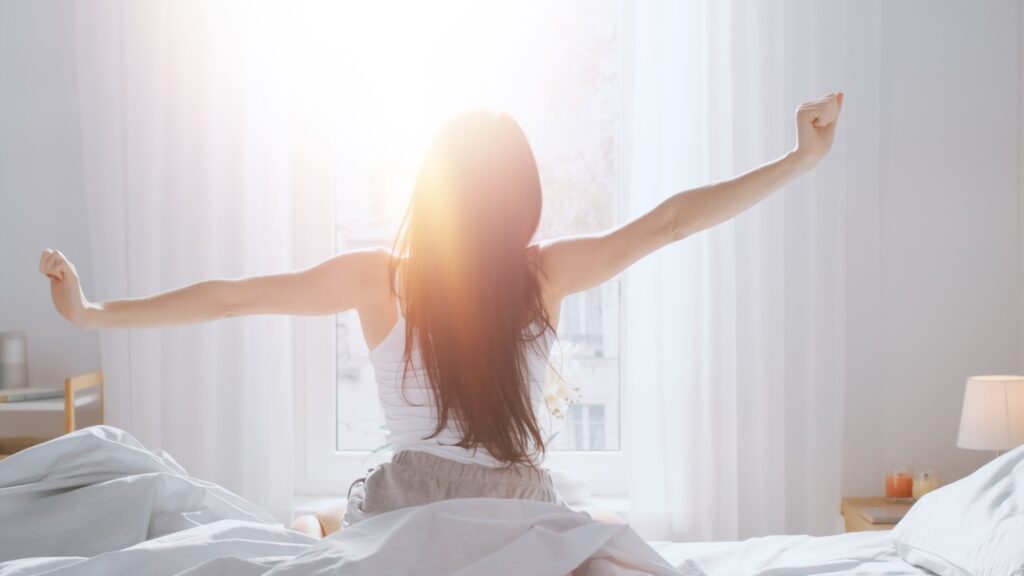
Improving sleep doesn’t require doing everything at once.
Small, consistent changes add up. Use this action plan as a guide — choose one or two steps to start with, and build from there.
1. Anchor Your Body Clock
- Get outside within 30–60 minutes of waking, even on cloudy days
- Keep bedtime and wake time consistent, including weekends
- Dim lights and reduce stimulation 2 hours before bed
Why it matters: A well-set circadian rhythm makes falling asleep and staying asleep much easier.
2. Create a Sleep-Friendly Bedroom
- Use your bed only for sleep and intimacy
- Remove or limit screens in the bedroom
- Keep the room cool, dark, and quiet
- Turn the clock away to avoid time-watching
Why it matters: Your brain learns to associate your bedroom with rest — not stress.
3. Build a Wind-Down Routine
- Choose 2–3 calming activities to repeat nightly
(e.g. reading, breathing, stretching, a warm shower) - Aim to start winding down 60–90 minutes before bed
- Keep it simple and realistic — consistency beats perfection
Why it matters: Repetition signals safety to your nervous system and prepares your body for sleep.
4. Use Movement and Light Wisely
- Move your body daily (even a 20-minute walk counts)
- Get daylight exposure during the day
- Avoid vigorous exercise close to bedtime
- Use warm, dim lighting in the evening
Why it matters: Movement and light are powerful regulators of sleep quality.
5. Be Strategic With Caffeine, Alcohol, and Naps
- Limit caffeine to the morning or early afternoon
- Avoid alcohol within 3 hours of bedtime
- If napping, keep it under 30 minutes and before mid-afternoon
Why it matters: These factors commonly fragment sleep without people realising.
6. Eat and Hydrate for Better Sleep
- Finish eating 2–3 hours before bed
- Aim for balanced meals with protein, fibre, and complex carbs
- Avoid heavy, salty, or sugary evening meals
- Hydrate earlier in the day to reduce night waking
Why it matters: Blood sugar balance and digestion strongly affect sleep depth and continuity.
7. Calm the Mind
- Write worries down before bed
- Try slow breathing, meditation, or guided relaxation
- Keep a notebook by the bed for racing thoughts
- If sleep issues persist, consider CBT-I, the gold standard treatment for insomnia
Why it matters: A calm nervous system is essential for falling asleep and staying asleep.
8. Know When to Ask for Help
If sleep problems persist despite lifestyle changes — or if symptoms are affecting your quality of life — talk to your healthcare provider. Hormonal changes, sleep disorders, and mental health factors can all play a role, and support is available.
Final Thought
Better sleep is not about doing everything perfectly — it’s about creating the right conditions for rest. Be patient, be kind to yourself, and remember that even small changes can lead to meaningful improvements over time.
If you’d like more structured support, our Restorative Sleep module and Reboot Your Health course guide you step by step with practical tools, education, and calming practices to help you sleep better — night after night.
Better sleep really is possible 🌙
REFERENCES:
https://www.sleepfoundation.org/insomnia/treatment/cognitive-behavioral-therapy-insomnia
Park, S., Oh, M., Lee, B., Kim, H., Lee, W., Lee, J., Lim, J., & Kim, J. (2015). The Effects of Alcohol on Quality of Sleep. Korean Journal of Family Medicine, 36(6), 294–299. Retrieved fromhttps://www.ncbi.nlm.nih.gov/pmc/articles/PMC4666864/
Coltrain, I., Nicholas, C., & Baker, F. (2018). Alcohol and the Sleeping Brain. Handbook of Clinical Neurology, 125, 415–431. Retrieved from https://www.ncbi.nlm.nih.gov/pmc/articles/PMC5821259/
Sleep Health Foundation. (2013). Caffeine, Food, Alcohol, Smoking and Sleep. Retrieved fromhttps://www.ncbi.nlm.nih.gov/pmc/articles/PMC2775419/
Stein, M. D., & Friedmann, P. D. (2005). Disturbed sleep and its relationship to alcohol use. Substance abuse, 26(1), 1–13.https://doi.org/10.1300/j465v26n01_01
Kaur, H., Spurling, B.C., Bollu, P.C. (2020, July). Chronic Insomnia. StatPearls Publishing. Retrieved fromhttps://www.ncbi.nlm.nih.gov/books/NBK526136/
Merck Manual Consumer Version. (n.d.). Tables: Changes in behavior to improve sleep. Retrieved December 23, 2021, fromhttps://www.merckmanuals.com/home/multimedia/table/v55322935
Cho, C. H., Yoo, H. K., Kang, S. G., Kim, L., Lee, E. I., & Lee, H. J. (2018). Impact of exposure to dim light at night on sleep in female and comparison with male subjects. Psychiatry Investigation, 15(5), 520–530.https://pubmed.ncbi.nlm.nih.gov/29551048/
Cho, C. H., Lee, H. J., Yoon, H. K., Kang, S. G., Bok, K. N., Jung, K. Y., Kim, L., & Lee, E. I. (2016). Exposure to dim artificial light at
night increases REM sleep and awakenings in humans. Chronobiology International, 33(1), 117–123.https://pubmed.ncbi.nlm.nih.gov/26654880/
Harding, E. C., Franks, N. P., & Wisden, W. (2019). The temperature dependence of sleep. Frontiers in Neuroscience, 13, 336.https://pubmed.ncbi.nlm.nih.gov/31105512/
Park, S. Y., Oh, M. K., Lee, B. S., Kim, H. G., Lee, W. J., Lee, J. H., Lim, J. T., & Kim, J. Y. (2015). The effects of alcohol on quality of sleep. Korean Journal of Family Medicine, 36(6), 294–299.https://pubmed.ncbi.nlm.nih.gov/26634095/
Spadola, C. E., Guo, N., Johnson, D. A., Sofer, T., Bertisch, S. M., Jackson, C. L., Rueschman, M., Mittleman, M. A., Wilson, J. G., & Redline, S. (2019). Evening intake of alcohol, caffeine, and nicotine: Night-to-night association with sleep duration and continuity among African Americans in the Jackson Heart Sleep Study. Sleep, 42(11), zsz136.https://pubmed.ncbi.nlm.nih.gov/31386152/
Drake, C., Roehrs, T., Shambroom, J., & Roth, T. (2013). Caffeine effects on sleep taken 0, 3, or 6 hours before going to bed. Journal of Clinical Sleep Medicine: JCSM: Official Publication of the American Academy of Sleep Medicine, 9(11), 1195–1200.https://pubmed.ncbi.nlm.nih.gov/24235903/
Wahl, S., Engelhardt, M., Schaupp, P., Lappe, C., & Ivanov, I. V. (2019). The inner clock–Blue light sets the human rhythm. Journal of Biophotonics, 12(12), Article e201900102.https://pubmed.ncbi.nlm.nih.gov/31433569/
Dolezal, B. A., Neufeld, E. V., Boland, D. M., Martin, J. L., & Cooper, C. B. (2017). Interrelationship between sleep and exercise: A systematic review. Advances in Preventive Medicine, 2017, Article 1364387.https://pubmed.ncbi.nlm.nih.gov/28458924/
Pengpid, S., & Peltzer, K. (2019). Sedentary behaviour and 12 sleep problem indicators among middle-aged and elderly adults in South Africa. International Journal of Environmental Research and Public Health, 16(8), 1422.https://pubmed.ncbi.nlm.nih.gov/31010026/
Fiorentino, L., & Martin, J. L. (2010). Awake at 4 am: Treatment of insomnia with early morning awakenings among older adults. Journal of Clinical Psychology, 66(11), 1161–1174.https://pubmed.ncbi.nlm.nih.gov/20845423/
Jerath, R., Beveridge, C., & Barnes, V. A. (2019). Self-regulation of breathing as an adjunctive treatment of insomnia. Frontiers in Psychiatry, 9, 780.https://pubmed.ncbi.nlm.nih.gov/30761030/
Rusch, H. L., Rosario, M., Levison, L. M., Olivera, A., Livingston, W. S., Wu, T., & Gill, J. M. (2019). The effect of mindfulness meditation on sleep quality: A systematic review and meta-analysis of randomized controlled trials. Annals of the New York Academy of Sciences, 1445(1), 5–16.https://pubmed.ncbi.nlm.nih.gov/30575050/
Carter, K. S., & Carter 3rd, R. (2016). Breath-based meditation: A mechanism to restore the physiological and cognitive reserves for optimal human performance. World Journal of Clinical Cases, 4(4), 99–102.https://pubmed.ncbi.nlm.nih.gov/27099859/
Norelli, S. K., Long, A., & Krepps, J. M. (2021). Relaxation techniques. In StatPearls [Internet]. StatPearls Publishing. Retrieved December 23, 2021, fromhttps://pubmed.ncbi.nlm.nih.gov/30020610/
Ebben, M. R., Yan, P., & Krieger, A. C. (2021). The effects of white noise on sleep and duration in individuals living in a high noise environment in New York City. Sleep Medicine, 83, 256–259.https://pubmed.ncbi.nlm.nih.gov/34049045/
Sakurai, N., Ohno, K., Kasai, S., Nagasaka, K., Onishi, H., & Kodama, N. (2021). Induction of relaxation by autonomous sensory meridian response. Frontiers in Behavioral Neuroscience, 15, Article 761621.https://pubmed.ncbi.nlm.nih.gov/34916914/
Krakow, B., Krakow, J., Ulibarri, V. A., & Krakow, J. (2012). Nocturnal time monitoring behavior (“clock-watching”) in patients presenting to a sleep medical center with insomnia and posttraumatic stress symptoms. The Journal of Nervous and Mental Disease, 200(9), 821–825.https://pubmed.ncbi.nlm.nih.gov/22932731/
Markwald, R. R., Iftikhar, I., & Youngstedt, S. D. (2018). Behavioral strategies, including exercise, for addressing insomnia. ACSM’s Health & Fitness Journal, 22(2), 23–29.https://pubmed.ncbi.nlm.nih.gov/31467475/