

What to eat for a better night’s sleep
Science-backed nutrition tips to help you fall asleep faster, stay asleep longer, and wake feeling refreshed

We all know sleep is essential—but getting a good night’s rest can often feel out of reach. Whether it’s tossing and turning, waking in the night, or simply struggling to switch off, sleep issues are increasingly common.
What many people don’t realise, however, is that your diet can have a powerful effect on how well you sleep.
In fact, what you eat during the day—and especially at night—can either support deep, restorative sleep or work against it. This is because the right nutrients help your brain create sleep-inducing hormones and neurotransmitters, while in contrast a poor diet can trigger inflammation, blood sugar crashes, and night-time wakefulness!
In this post, we’ll explore how food affects your sleep, which nutrients make a difference, what to avoid, and how to build a sleep-supporting diet backed by the latest scientific research.
The Brain-Sleep-Nutrition Connection
Sleep is a complex process regulated by your brain’s internal clock (circadian rhythm), which depends on hormones like melatonin, serotonin, GABA, and cortisol. These are all directly influenced by what you eat.
Your brain literally needs the right nutrients to manufacture the chemicals that help you fall—and stay—asleep. Without them, the system falters. For example:
✓ Low intake of vitamins and minerals like magnesium, folate, and B6 has been linked to poor sleep, insomnia, and anxiety.
✓ Sleep deprivation also affects your food choices—causing increased cravings for high-calorie, ultra-processed foods and more evening snacking.
✓ This creates a vicious cycle: poor sleep → poor food choices → even worse sleep.
So, how do we break the cycle?
A Sleep-Supporting Diet: What the Research Says
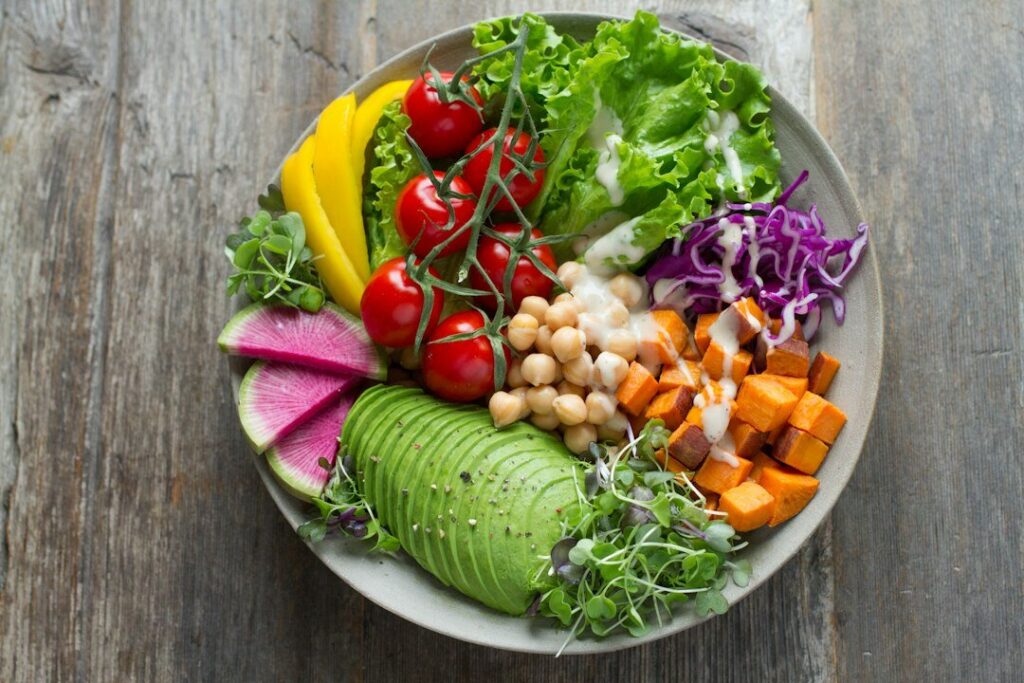
The good news is, that a whole-food diet—rich in fruits, vegetables, legumes, whole grains, nuts, and seeds, and low in refined sugar, saturated fat, and processed foods—has been consistently linked with better sleep and healthier weight.
For example, a recent study published in Sleep Health (2025) showed that young adults who followed a Mediterranean-style diet reported:
✓ Better sleep quality
✓ Fewer nighttime awakenings
✓ Increased sleep duration and efficiency
This diet includes high levels of:
✓ Plant-based foods (vegetables, fruit, legumes, whole grains)
✓ Healthy fats (especially olive oil and nuts)
✓ Lean proteins (like fish and poultry)
✓ Very little red meat, processed food, or added sugar
Even more impressive? This diet improved sleep better than melatonin supplements in some cases—and also supports mood, energy, heart health, and brain aging.
In contrast, another recent study showed that food doesn’t just have the potential to improve your sleep – some foods can even give you nightmares!
In a quirky survey of 1000+ young adults, looking at sleep and bad dreams:
✓ Dairy & sweets were most linked to disturbing dreams
✓ Fruits, veggies & herbal teas promoted pleasant dreams
✓ People with lactose intolerance had more nightmares — likely due to GI distress
✓ Late-night eating also increased nightmare frequency
And interestingly, most people had no idea food affected their dreams
So what’s going on? Researchers propose 3 mechanisms:
- Food-specific effects: Certain foods may contain chemicals that alter dreaming (like medications can).
- Food-distress hypothesis: GI upset from trigger foods may disrupt sleep and provoke nightmares.
- Sleep-quality hypothesis: Foods that impact sleep (like alcohol or caffeine) set the stage for restless nights and intense dreams.

Gut Health and Sleep
And on the topic of food and sleep, ou may have heard of the gut brain connection in relation to mood – but did you know it also plays a role in sleep too?
A groundbreaking 2024 review in Nutrients found that a diverse and healthy gut microbiome plays a critical role in regulating not just how we feel during the day, but also our sleep at night. How does this work?
Our gut bacteria produce:
✓Short-chain fatty acids (which calm the nervous system)
✓GABA and serotonin (calming brain chemicals)
✓Melatonin precursors
These gut-derived compounds in turn can influence brain activity, reduce inflammation, and promote deeper sleep.
So how do we feed our gut microbes?
Best foods for gut and sleep:
- Prebiotic fibers: oats, bananas, asparagus, garlic, onions
- Fermented foods: yoghurt, kefir, sauerkraut, miso
- Polyphenol-rich foods: berries, olive oil, green tea, herbs
- Resistant starches: legumes, cooked/cooled potatoes, lentils
A gut-friendly diet is a sleep-friendly diet too!
The Best Sleep Nutrients and Where to Find Them
Next let’s dive deeper, and break down the key nutrients and compounds that have been proven to support sleep.
1. Tryptophan
This is an amino acid that’s essential for making serotonin and melatonin—both vital for sleep and mood.
It’s found in foods like poultry, eggs, tofu, soybeans, nuts, seeds, leafy greens, broccoli, oats
Studies also show that fortifying food with tryptophan can improve sleep quality, although in general eating a diet naturally rich in tryptophan is generally enough.
2. Melatonin
Melatonin is the “sleep hormone” produced in our brain—but it’s also found in small amounts in some foods. While eating these foods does not make a significant difference to our overall levels of melatonin, they may help to support sleep when we include them in our diet.
Foods high in melatonin include kiwifruit, tart cherries, tomatoes, pineapple, walnuts, pistachios, mushrooms, bananas
Fun fact: A clinical trial found that eating 2 kiwifruit one hour before bed improved sleep duration and reduced the time it took to fall asleep
3. Magnesium
Magnesium helps relax muscles and the nervous system. Deficiency is linked to insomnia and anxiety.
Foods high in magnesium include dark leafy greens, pumpkin seeds, almonds, oats, black beans
Research links low magnesium to poor sleep and night-time wakings.
4. Folate (Vitamin B9)
This helps to support mood and sleep; deficiency can increase the risk of insomnia and restless legs.
Foods high in folate include spinach, kale, broccoli, lentils, chickpeas, avocado
5. Dietary Fibre
Fibre feeds your gut microbes, it also stabilises blood sugar, and supports restorative slow-wave sleep.
Foods high in dietary fibre include legumes, whole grains, root vegetables, flaxseeds
Studies show low fibre diets are associated with lighter, poorer quality sleep.
6. Complex Carbohydrates
These help to lower cortisol and increase serotonin levels – essential for sustained energy and calming the nervous system.
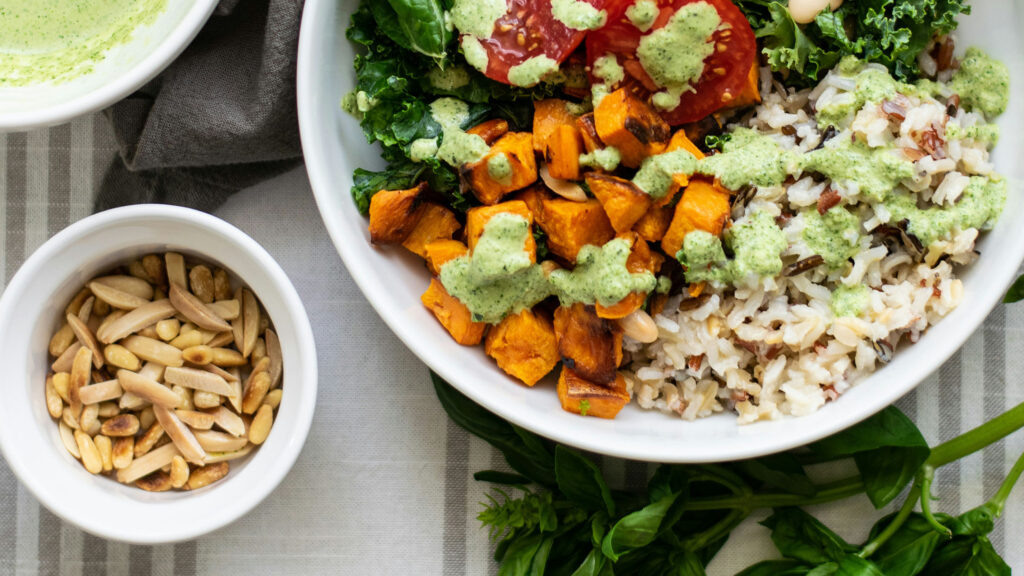
Foods that contain complex carbs include brown rice, quinoa, lentils, sweet potato, oats.
One study looking at carbohydrate intake in older people, found that diets rich in complex carbs were linked with better sleep, mood and mental health, whereas diets high in refined carbs (ie white flour, white rice, pasta, sugary foods) negatively impacted sleep and mood.
7. Soy Isoflavones
These are plant compounds that mimic estrogen, and can be especially helpful for sleep in perimenopausal and menopausal women.
Foods high in soy isoflavones include tofu, tempeh, soy milk, edamame
A 2015 study of 1076 adults found higher soy isoflavone intake was significantly associated with longer optimal sleep duration and better sleep quality.
What to Avoid Before Bed
Just as certain foods help sleep, others make it harder, and should be limited (or avoided if necessary) for optimal sleep.
Caffeine
This is found in coffee, tea, cola, energy drinks, and even dark chocolate – it has a long half-life so can stay in your system for 6–8 hours
Avoid after 2–3pm for best results
Alcohol
Although it may make you sleepy, it disrupts REM and deep sleep significantly, reducing overall sleep quality.
Alcohol intake in the evening increases night-time waking, and is also linked to poor sleep quality and mood
Refined Sugar & High GI Carbs
These can cause blood sugar crashes that wake you up at night – if you’re noticing more nighttime waking after eating high carb meals in the evening, this could be the culprit!
Studies show that high-GI meals in the evening can increase night-time wakefulness, and reduce sleep quality.
Foods to limit or avoid late at night include white bread, noodles, pastries, lollies, sweet drinks
Heavy Meals Before Bed
These can cause indigestion and reflux, impacting on sleep quality.
Aim to eat your last main meal 2–4 hours before bedtime
Meal Timing for Sleep
When you eat matters almost as much as what you eat.
Try to:
- Eat dinner 3–4 hours before bed
- Avoid late-night snacking
- If needed, opt for a light snack with tryptophan or melatonin
Great evening snack ideas:
- Kiwi + a few almonds
- Warm oats with banana and milk
- Tart cherry smoothie with soy milk
- Pumpkin seed trail mix
Bonus Tips: Lifestyle Habits That Support Sleep
Food is powerful—but for the best sleep, combine dietary changes with lifestyle tweaks.
Sleep Hygiene Basics:
- Keep a regular sleep/wake time—even on weekends
- Get bright light in the morning (sunlight is best!)
- Dim lights 1–2 hours before bed
- Avoid screens for 1 hour before sleep
- Keep your bedroom cool, quiet, and dark
- Try gentle stretching, deep breathing, or journaling at night
The Bottom Line
Getting better sleep doesn’t have to mean taking a pill or overhauling your life.
By focusing on nutrient-rich, gut-friendly, whole-food meals—especially those rooted in Mediterranean or plant-based traditions—you can dramatically improve your sleep quality, duration, and consistency.
Even small changes—like adding kiwi or cutting caffeine—can have big impacts.
 Ready to Sleep Better?
We teach all of this (and much more) in our courses, include the Sleep Module of our 30 Days to Whole Health course; our Reboot Your Health signature program; and our Restore Your Sleep focused course.
If you’d like to learn more please check them out!
MORE REFERENCES:
Ikonte, C. J., Mun, J. G., Reider, C. A., Grant, R. W., & Mitmesser, S. H. (2019). Micronutrient Inadequacy in Short Sleep: Analysis of the NHANES 2005-2016. Nutrients, 11(10), 2335.https://doi.org/10.3390/nu11102335
St-Onge, M. P., Mikic, A., & Pietrolungo, C. E. (2016). Effects of Diet on Sleep Quality. Advances in nutrition (Bethesda, Md.), 7(5), 938–949.https://doi.org/10.3945/an.116.012336
Muscogiuri, G., Barrea, L., Aprano, S., Framondi, L., Di Matteo, R., Laudisio, D., Pugliese, G., Savastano, S., Colao, A., & on behalf of the OPERA PREVENTION Project (2020). Sleep Quality in Obesity: Does Adherence to the Mediterranean Diet Matter?. Nutrients, 12(5), 1364.https://doi.org/10.3390/nu12051364
Liang, H., Beydoun, H. A., Hossain, S., Maldonado, A., Zonderman, A. B., Fanelli-Kuczmarski, M. T., & Beydoun, M. A. (2020). Dietary Approaches to Stop Hypertension (DASH) Score and Its Association with Sleep Quality in a National Survey of Middle-Aged and Older Men and Women. Nutrients, 12(5), 1510.https://doi.org/10.3390/nu12051510
Wu, Y., Zhai, L., & Zhang, D. (2014). Sleep duration and obesity among adults: a meta-analysis of prospective studies. Sleep medicine, 15(12), 1456–1462.https://doi.org/10.1016/j.sleep.2014.07.018
Grandner, M. A., Jackson, N., Gerstner, J. R., & Knutson, K. L. (2014). Sleep symptoms associated with intake of specific dietary nutrients. Journal of sleep research, 23(1), 22–34.https://doi.org/10.1111/jsr.12084
Greer, S. M., Goldstein, A. N., & Walker, M. P. (2013). The impact of sleep deprivation on food desire in the human brain. Nature communications, 4, 2259.https://doi.org/10.1038/ncomms3259
Spiegel, K., Tasali, E., Penev, P., & Van Cauter, E. (2004). Brief communication: Sleep curtailment in healthy young men is associated with decreased leptin levels, elevated ghrelin levels, and increased hunger and appetite. Annals of internal medicine, 141(11), 846–850https://doi.org/10.7326/0003-4819-141-11-200412070-00008
Spaeth, A. M., Dinges, D. F., & Goel, N. (2013). Effects of Experimental Sleep Restriction on Weight Gain, Caloric Intake, and Meal Timing in Healthy Adults. Sleep, 36(7), 981–990.https://doi.org/10.5665/sleep.2792
Garaulet, M., Gómez-Abellán, P., Alburquerque-Béjar, J. J., Lee, Y. C., Ordovás, J. M., & Scheer, F. A. (2013). Timing of food intake predicts weight loss effectiveness. International journal of obesity (2005), 37(4), 604–611.https://doi.org/10.1038/ijo.2012.229
Patricia NehmeE, laine Cristina Marqueze,Melissa Ulhôa,Eloisa Moulatlet,Maria Alice Codarin &Claudia Roberta MorenoEffects of a carbohydrate-enriched night meal on sleepiness and sleep duration in night workers: A double-blind intervention. The Journal of Biological and Medical Rhythm Research. Volume 31, 2014 – Issue 4 Pages 453-460. https://www.tandfonline.com/doi/full/10.3109/07420528.2013.821478
St-Onge MP, Roberts A, Shechter A, Choudhury AR. Fiber and saturated fat are associated with sleep arousals and slow wave sleep. J Clin Sleep Med, 2016;12(1):19%u201324. DOI: 10.5664/jcsm.5384
Yufei Cui, Kaijun Niu, and Ryoichi Nagatomi. Relationship between daily isoflavone intake and sleep in Japanese adults: a cross-sectional study. Nutr J. 2015; 14: 127. doi: 10.1186/s12937-015-0117-x
Hsiao-Han Lin et al. Effect of kiwifruit consumption on sleep quality in adults with sleep problems. Asia Pac J Clin Nutr. 2011. 2011;20(2):169-74. https://pubmed.ncbi.nlm.nih.gov/21669584/
Mendel Friedman. Analysis, Nutrition, and Health Benefits of Tryptophan. Int J Tryptophan Res. 2018; 11: 1178646918802282. Published online 2018 Sep 26. doi: 10.1177/1178646918802282