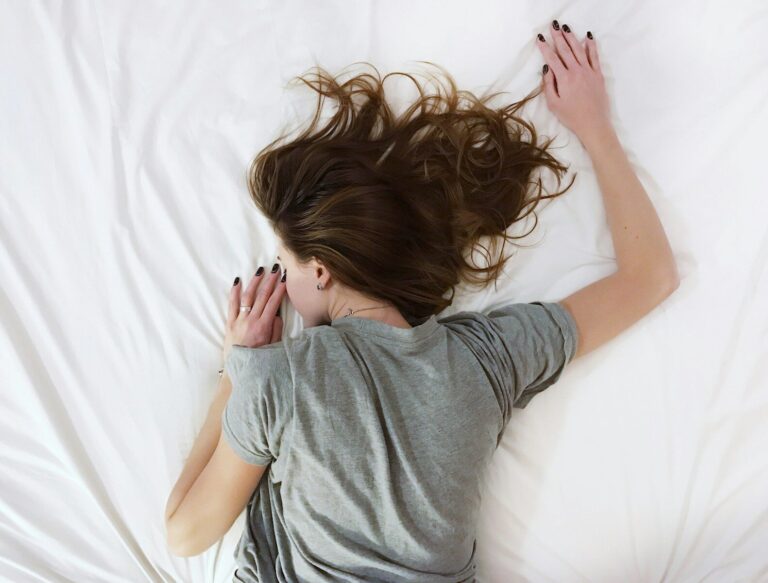

Why Sleep Feels So Much Harder In Your 40s
If you’ve found yourself lying awake at 3am wondering what happened to your ability to sleep, you’re not alone.
Poor sleep is one of the most common issues impacting women in their forties and beyond..
It often starts innocently enough.
You might still fall asleep reasonably easily. You climb into bed, read a few pages of a book, switch off the light, and drift off.
Then somewhere between 2am and 4am your eyes snap open.
Sometimes you’re drenched in sweat. Sometimes your heart is racing.
Sometimes there is no obvious reason at all. You’re just awake.
And not the kind of awake where you roll over and go back to sleep.
The kind where your brain suddenly decides that now is the perfect time to review every mistake you’ve ever made, every task you forgot to complete, every future problem that may or may not ever happen, and whether that strange symptom you’ve been ignoring is definitely something terrible.
You look at the clock.
3:12am.
Again. Yet another night where sleep just doesn’t happen.
For many women, this becomes one of the defining experiences of perimenopause. Not the hot flushes. Not the irregular periods. Not even the mood changes.
The sleep.
Because when sleep starts to unravel, everything else often follows.
Your mood becomes harder to regulate. Your anxiety feels louder. Your resilience shrinks. Your patience disappears. Your memory seems unreliable.
And suddenly life feels much harder than it used to.
The important thing to understand is that this isn’t happening because you’re weak, stressed, failing to cope, or “getting older.”
There are very real biological reasons why sleep becomes more difficult during the menopause transition. And perhaps even more importantly, there are evidence-based strategies that can help.
Sleep Problems Are One Of The Most Common Symptoms Of Perimenopause
Many women are surprised to learn just how common sleep difficulties become during midlife.
In fact research suggests that between 40% and 69% of women experience significant sleep disturbance during the menopause transition, while up to 40% meet criteria for insomnia disorder (1,)(2).
That’s not a small minority. That’s millions of women worldwide struggling with something that can profoundly affect every aspect of daily life.
What’s particularly interesting is that sleep disruption is often one of the earliest symptoms to appear.
Many women notice changes in sleep years before they identify themselves as being in perimenopause.
Their periods may still be relatively regular. Hot flushes may not have started. Yet something about sleep has shifted.
They wake more easily. Sleep feels lighter. Recovery from a poor night’s sleep takes longer. They no longer feel refreshed in the morning.
For some women, sleep disruption becomes the first whisper that hormonal change is beginning.
But hormones aren’t the only driver of poor sleep.
While hormones often get blamed for every sleep problem that occurs in midlife, the reality is much more nuanced.
Research suggests some sleep difficulties are related to normal ageing, some are linked to psychosocial stressors, while others appear more directly linked to hormonal changes and menopausal symptoms.
The real challenge is that for many women these factors occur simultaneously, making it difficult to separate one from another (1)
But ultimately, what matters most is that sleep disruption during this stage of life is common, real, and desperately needs our attention, as so many women are suffering.

It’s Not Just About Feeling Tired
One of the biggest misconceptions about sleep is that its only purpose is helping us feel rested the next day.
The reality is very different.
Sleep is one of the most biologically active processes in the human body. While you’re asleep, your brain is regulating emotions, consolidating memories, processing experiences, supporting immune function, regulating metabolism, and clearing metabolic waste products that accumulate during waking hours.
Sleep is when the body performs some of its most important maintenance work.
Which is why poor sleep affects so much more than energy levels.
Women often say things like: “I don’t feel like myself anymore.” “I can’t cope with things the way I used to.” “I’ve become so anxious.”
Sometimes these experiences are attributed entirely to hormones. Sometimes to stress. Often, poor sleep is sitting quietly in the middle of the picture, amplifying everything else.
Sleep is literally the golden chain that holds everything else together.
Hormones: The Hidden Sleep Regulators
Most women know that oestrogen and progesterone affect fertility and menstruation. What is less well known is how profoundly they influence the brain.
These hormones help regulate many of the same systems responsible for sleep, mood, emotional regulation, temperature control, memory, and stress resilience. As hormone levels fluctuate during perimenopause, sleep can become affected from multiple directions at once.
Oestrogen
Oestrogen influences serotonin, melatonin, mood regulation, thermoregulation, and circadian rhythms. As levels decline, many women report that sleep feels lighter, more fragmented, and less restorative.
Research shows that lower estradiol and higher FSH levels are associated with more awakenings during the night — independent of hot flushes and mood symptoms (4). This is significant. It tells us that hormones may directly affect sleep quality through their effects on the brain itself, not simply through hot flushes and night sweats.
Progesterone
Progesterone is sometimes described as nature’s calming hormone. Its metabolites interact with GABA receptors, helping to promote relaxation and reduce anxiety (8). Many women never realise how much support progesterone has been providing until levels begin to decline.
As progesterone falls, women often describe feeling more anxious, more emotionally reactive, struggling to switch off mentally, feeling exhausted but unable to relax, and experiencing more frequent awakenings.
It’s not that sleep suddenly disappears overnight. It’s that the nervous system becomes slightly more activated and slightly less resilient. Night after night, that adds up.

Why Hot Flushes And Night Sweats Wake You Up
When hormones start to fluctuate in perimenopause, the hypothalamus — your brain’s thermostat — becomes more sensitive to any change in environment.
Small variations in body temperature that would previously have gone unnoticed can suddenly trigger a cascade of physiological responses.
Blood vessels dilate. Heart rate rises. Sweating begins. And sleep is interrupted.
Research shows that women with moderate-to-severe vasomotor symptoms are almost three times more likely to experience frequent nocturnal awakenings than women without these symptoms (1).
What makes this particularly challenging though, is that repeated awakenings disrupt deep sleep.
You may spend eight hours in bed, but if your sleep is repeatedly fragmented, you wake feeling exhausted.
Importantly, newer research also shows that nocturnal hot flushes contribute to depressed mood independently of their effect on sleep — a finding that doesn’t apply to daytime hot flushes (5).
This may help explain why women experiencing severe night sweats often describe feeling emotionally depleted or overwhelmed even when they believe they’ve slept “enough.”
The 3am Wake-Up And The Cortisol Connection
Perhaps no symptom captures the perimenopausal experience quite like the infamous 3am wake-up.
Women describe it with remarkable consistency. And the timing isn’t random.
Part of the explanation involves the body’s stress response system.
Cortisol (your stress hormone) naturally begins rising during the early morning hours in preparation for waking, while melatonin (sleep hormone) falls.
When stress systems become more sensitive — as they often do during midlife — women may become more vulnerable to waking, and staying awake, during this period (8).
At the same time, many women are navigating an perfect storm of responsibilities: careers, teenagers, ageing parents, financial pressures, relationship stress, health concerns. The cognitive and emotional load can be immense.
Add fluctuating hormones to the mix and the result can be what many women describe as feeling “tired but wired.”
Your body is exhausted. Your brain is alert. And suddenly you are wide awake, mentally planning tomorrow’s schedule before sunrise.

Sleep And Mental Health: The Relationship Runs Both Ways
One of the most important messages emerging from menopause research is that sleep and mental health are deeply intertwined.
Poor sleep contributes to anxiety, irritability, low mood, emotional sensitivity, reduced resilience, and difficulty concentrating. At the same time, anxiety and depression make sleep more difficult.
This can create a vicious, self-perpetuating cycle.
In fact research indicates that sleep disturbance largely accounts for the association between hot flushes and depressed mood — with pooled data from over 20,000 women showing sleep disruption is a key mediator (3).
This also helps to explain why improving sleep can sometimes create surprisingly rapid improvements in emotional wellbeing.
Not because every stressor disappears, but because the brain finally gets an opportunity to recover.
Sleep is not a luxury during perimenopause. It is one of the most powerful mental health interventions available.
Brain Fog, Memory, And Cognitive Function
Many women also become frightened by the cognitive changes they experience during perimenopause.
Words disappear. Names become harder to retrieve. Concentration feels effortful. Dementia starts to be a real fear..
But sleep plays a major role here.
This is because memory consolidation, learning, and emotional processing all occur during sleep (8).
When sleep becomes fragmented, these processes become less efficient.
Often what feels like cognitive decline is actually cognitive exhaustion.
The encouraging news is that many women notice significant improvements in mental clarity when sleep begins to improve.
Could It Be Something Else?
Not every sleep problem during midlife is caused by hormones though.
Other contributors may include sleep apnoea, restless legs syndrome, iron deficiency, thyroid issues, chronic pain, migraines, sore joints, bladder frequency, anxiety disorders, depression, and medication side effects (8).
Sleep apnoea deserves particular attention.
The risk increases after menopause, yet women are often underdiagnosed because symptoms may present differently than in men. Persistent fatigue, morning headaches, brain fog, insomnia, and low mood may all be signs that a sleep disorder is contributing, especially if it fails to improve with standard treatment.
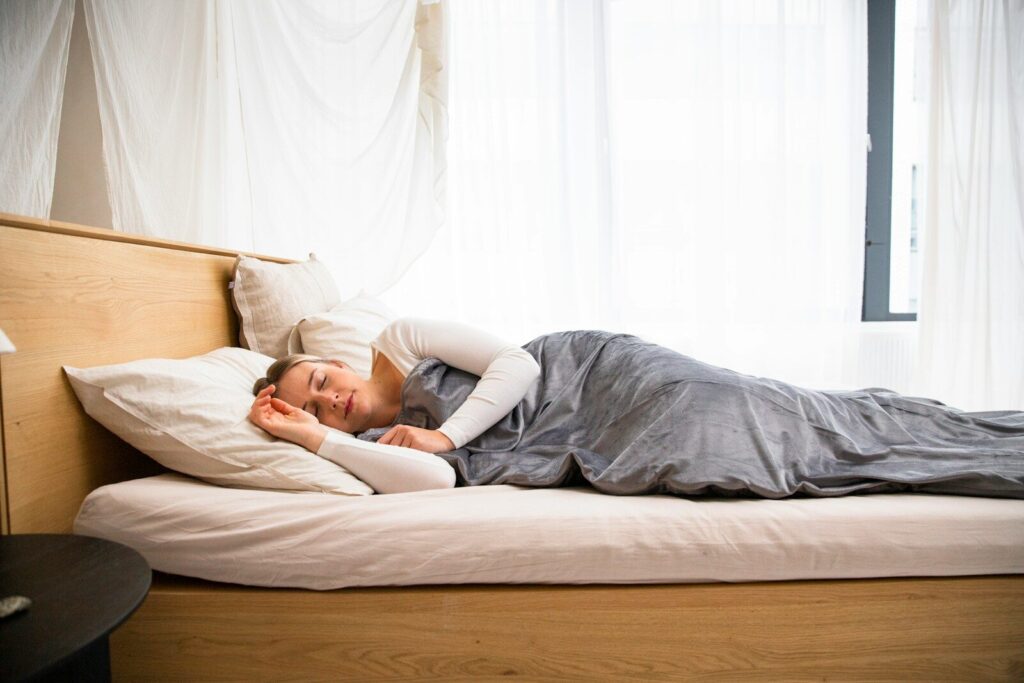
So What Actually Helps?
The good news is that sleep difficulties during perimenopause are highly treatable.
But the most effective approach usually isn’t a single intervention — it involves understanding what is driving your sleep difficulties and building a personalised strategy around those factors.
Cognitive Behavioural Therapy For Insomnia (CBT-I)
If there is one treatment women should know about, it is CBT-I.
Cognitive Behavioural Therapy for Insomnia is the gold-standard, first-line treatment for chronic insomnia — recommended ahead of sleeping pills, ahead of supplements, for all adults regardless of whether vasomotor symptoms or mood disorders are also present (8).
A 2026 meta-analysis of 22 studies involving 1,648 women, found CBT significantly reduced Pittsburgh Sleep Quality Index scores — suggesting reliable, reproducible effects (7).
A separate 2022 meta-analysis and systematic review confirmed meaningful improvements in sleep quality, sleep efficiency, and insomnia symptoms in menopausal women (6).
CBT-I works by addressing the habits, thought patterns, and physiological responses that keep insomnia going long after it begins. Core components include sleep restriction therapy, stimulus control, cognitive restructuring, relaxation training, and sleep education.
Rather than temporarily sedating the brain, it teaches the brain how to sleep again — creating lasting change that medication alone cannot provide.
Menopausal Hormone Therapy (HRT)
When hot flushes and night sweats are driving sleep disruption, menopausal hormone therapy (MHT/HRT) can be one of the most effective interventions available.
Reducing vasomotor symptoms often leads to significant improvements in sleep quality (8).
Oestrogen based HRT can also help improve sleep quality, mood, and support nervous system balance – so if sleep issues have suddenly appeared, and aren’t responding to lifestyle strategies, it is always worth considering.
And while it’s most commonly used to protect the uterine lining when using HRT, micronised progesterone (Utrogestan) can be a hidden hero for sleep too — as it has natural sleep-promoting properties due to its interaction with GABA receptors.
Progesterone is typically taken cyclically until periods stop (ie for 2 weeks each month), however it can sometimes also be used continously (off license) throughout the month to support better sleep.
Treatment should always be individualised though, so talk to your doctor or a menopause practitioner to explore what options are right for you.
Morning Light Exposure
One of the simplest and most overlooked sleep interventions is also one of the most powerful – and it’s free.
Morning sunlight helps regulate your body’s master clock.
Exposure to natural light shortly after waking helps strengthen circadian rhythms, support melatonin production later in the day, and improve sleep quality.
Aim for 10–30 minutes outdoors each morning, ideally within an hour of waking, and prior to going on screens.
It sounds simple. But it really does work.
Exercise
Exercise is key for healthy sleep, as it improves sleep quality through multiple pathways — supporting mood, reducing anxiety, improving circadian rhythm regulation, increasing sleep drive, and improving overall health.
Research consistently shows that menopausal women who exercise regularly, have better sleep (6).
Walking, swimming, cycling, yoga, Pilates, and resistance training can all be beneficial.
But the bottom line?
Find something you enjoy, and do it regularly – because consistency matters far more than perfection.
Helping Your “Tired But Wired” Nervous System
For many women, insomnia is actually a problem of hyperarousal.
Their nervous system struggles to switch off, and sleep goes out the window.
This makes mind body therapies such as mindfulness, meditation, breathing exercises, progressive muscle relaxation, yoga nidra, and journaling all helpful tools to calm the nervous system, restore balance, and support quality restorative sleep (6).
These practices aren’t about forcing sleep.
They’re about creating the conditions that allow sleep to occur naturally.
Bye Bye Alcohol
While many women enjoy a drink or two to wind down and switch off at the end of the day, alcohol affects sleep differently in midlife.
Although it may make you sleepy initially, alcohol frequently worsens sleep quality later in the night — increasing awakenings, worsening night sweats, disrupting REM sleep, and potentially aggravating sleep apnoea.
If you use a wearable to track sleep, try look at the difference in your sleep scores when you cut it out – it’s likely to be impacting your sleep more than you think!
This makes reducing alcohol often one of the fastest ways to improve sleep quality.
Foundational Sleep Hygiene
While clinical interventions like CBT-I or MHT are sometimes necessary, core sleep hygiene practices are also crucial for restorative rest.
Fine-tuning your daily routines and environment can help to support healthy sleep cycles, and should be part of any insomnia management plan.
Consistent Sleep Schedules
Going to bed and waking up at the same time every day—even on weekends—helps anchor your body’s circadian rhythm. Maintaining this consistency trains your brain to anticipate rest and supports a stronger, more reliable sleep drive at night.
Cooling Your Sleep Environment
Because your brain’s thermostat becomes highly sensitive during peri/menopause, maintaining a cool, well-ventilated bedroom is key for minimizing hot flushes and night sweats. Layering breathable bedding and using moisture-wicking nightwear or a bedside fan can also help you adjust your temperature quickly during the night without fully waking up.
Managing Blue Light and Screen Time
The blue light emitted by phones, tablets, and televisions impacts your brain’s ability to wind down, by actively suppressing natural melatonin production. Try turning off screens at least an hour before bed, and creating a calming bedtime routine—such as reading or taking a warm bath—to give your nervous system clear signals that it is time to relax.
Strategic Caffeine and Meal Timing
Caffeine stays in your system longer than most people realize, and during peri/menopause, it can be a common hidden sleep disruptor.
Ideally limit caffeinated drinks to the morning, and stop them at least eight to nine hours before bedtime.
Avoiding large, heavy meals or spicy foods late in the evening can also help support healthy sleep, as well as preventing reflux and bloating, reducing late night hot flushes.
Limiting Late-Day Napping
When you have a bad night’s sleep, catching up during the day can feel like the only way to get through. However, long naps or napping in the late afternoon can reduce ‘sleep pressure’ (by reducing hormones such as adenosine that make you sleepy later on), which then makes it harder to fall or stay asleep the following night. If you need to nap, try having a short nap before mid afternoon; and limit it to 20-30 minutes. Alternatively practices such as NDSR (non sleep deep relaxation) can also help.
Selective Supplementation
Supplements for sleep are not as well studied as other therapies, however among supplements, melatonin currently has the strongest evidence base.
Natural melatonin production declines with age, and research shows melatonin can improve circadian rhythm synchronisation, supports thermoregulation, and improves subjective sleep quality in postmenopausal women with sleep impairment at doses of 3mg or above (10).
Slow-release 2mg formulations can often be helpful, especially for women aged 55 and over (11), and are generally safe and effective to use.
Out of all herbal supplements, valerian has the most evidence supporting it’s use in insomnia — it is among the most studied supplements in this area; is generally safe and effective; and can be used both by itself, and in combination with other herbal products such as lemon balm, lavender, hops, fennel, and passionflower (9).
Saffron also shows promise in supporting sleep and mood, with doses ranging between 7.5mg-28mg in trials (9).
Magnesium is another popular sleep supplement, and is usually safe to trial, but it currently has less menopause-specific evidence than is often assumed. Magnesium glycinate 300mg is most commonly recommended, and may be combined with L-theanine.
Prior to trialling supplements, always talk to your doctor or pharmacist to ensure they are safe for you, especially if you take other prescription medications, or have underlying health conditions.

Why A Holistic Approach Works Best
While there are many effective treatments for poor sleep in peri/menopause, one of the clearest messages from the research is this:
There is rarely one single cause of poor sleep during perimenopause — and therefore rarely a single solution (7).
Hormones matter.
Stress matters.
Mental health matters.
Circadian rhythms matter.
Physical symptoms matter.
Life circumstances matter.
This is why the best approach is to acknowledge this complexity, and rather than searching for one magic fix, look at the whole person, to find the right balance for you.
The Most Important Message
Sleep disruption during perimenopause is not in your head – it is real.
It is common.
It is biological.
And it is treatable.
You do not need to simply accept poor sleep as the price of getting older. You do not need to wait until menopause is over, or until hot flushes or period changes occur to get help. And you do not need to struggle through it alone.
Sleep sits at the centre of physical health, emotional wellbeing, cognitive function, relationships, and quality of life.
It’s the chain that holds everything else together.
When sleep deteriorates, everything becomes harder. When sleep improves, everything often becomes easier.
So if you find yourself staring at the ceiling at 3am, wondering what happened to the effortless sleep you once enjoyed, know this:
You are not alone, there are real reasons for what you are experiencing, and there are many treatments that can help.
Restorative sleep should not be a luxury.
It should be the foundation of health at every stage of life.
At Your Lifestyle Medics, we offer 1:1 consultations via telehealth NZ wide, as well as exclusive wellbeing retreats, online courses and workshops.
So if you need a little extra support, we’re here for you.
And we’d love to help you.❤️
References
1.Breitinger-Blatt D, Lee J, Ribeiro Pereira SI, et al. Cognitive Behavioural Therapeutics for Insomnia Symptoms in the Perimenopause Through to the Early Postmenopausal Period. *Cochrane Database of Systematic Reviews*. 2026;4:CD016349. [doi:10.1002/14651858.CD016349](https://doi.org/10.1002/14651858.CD016349)
2. Balasubramanian I, Abhijita B, Krishnamoorthy Y, et al. Prevalence and Incidence of Depressive, Anxiety, and Insomnia Symptoms in Perimenopausal and Postmenopausal Women: Systematic Review and Meta-Analysis. *General Hospital Psychiatry*. 2026;100:325–335. [doi:10.1016/j.genhosppsych.2026.03.010](https://doi.org/10.1016/j.genhosppsych.2026.03.010)
3. Brown L, Hunter MS, Chen R, et al. Promoting Good Mental Health Over the Menopause Transition. *The Lancet*. 2024;403(10430):969–983. [doi:10.1016/S0140-6736(23)02801-5](https://doi.org/10.1016/S0140-6736(23)02801-5)
4. Coborn J, de Wit A, Crawford S, et al. Disruption of Sleep Continuity During the Perimenopause: Associations With Female Reproductive Hormone Profiles. *Journal of Clinical Endocrinology and Metabolism*. 2022;107(10):e4144–e4153. [doi:10.1210/clinem/dgac447](https://doi.org/10.1210/clinem/dgac447)
5.Joffe H, Crawford SL, Freeman MP, et al. Independent Contributions of Nocturnal Hot Flashes and Sleep Disturbance to Depression in Estrogen-Deprived Women. *Journal of Clinical Endocrinology and Metabolism*. 2016;101(10):3847–3855. [doi:10.1210/jc.2016-2348](https://doi.org/10.1210/jc.2016-2348)
<a id=”ref6″>**6.**</a> Lam CM, Hernandez-Galan L, Mbuagbaw L, et al. Behavioral Interventions for Improving Sleep Outcomes in Menopausal Women: A Systematic Review and Meta-Analysis. *Menopause*. 2022;29(10):1210–1221. [doi:10.1097/GME.0000000000002051](https://doi.org/10.1097/GME.0000000000002051)
<a id=”ref7″>**7.**</a> Luo R, Zhu J, Yang J. Effectiveness of Non-Pharmacological Interventions for Insomnia Related to Natural Menopause: A Meta-Analysis of Randomized Controlled Trials. *Maturitas*. 2026;209:108970. [doi:10.1016/j.maturitas.2026.108970](https://doi.org/10.1016/j.maturitas.2026.108970)
<a id=”ref8″>**8.**</a> Proserpio P, Marra S, Campana C, et al. Insomnia and Menopause: A Narrative Review on Mechanisms and Treatments. *Climacteric*. 2020;23(6):539–549. [doi:10.1080/13697137.2020.1799973](https://doi.org/10.1080/13697137.2020.1799973)
<a id=”ref9″>**9.**</a> Salame A, Mathew S, Bhanu C, et al. Over-the-Counter Products for Insomnia in Adults: A Scoping Review of Randomised Controlled Trials. *Sleep Medicine*. 2025;129:219–237. [doi:10.1016/j.sleep.2025.02.027](https://doi.org/10.1016/j.sleep.2025.02.027)
<a id=”ref10″>**10.**</a> Treister-Goltzman Y, Peleg R. Melatonin and the Health of Menopausal Women: A Systematic Review. *Journal of Pineal Research*. 2021;71(2):e12743. [doi:10.1111/jpi.12743](https://doi.org/10.1111/jpi.12743)
<a id=”ref11″>**11.**</a> Saraiva SP, D’Aurea CVR, Luz CSS, et al. Low-Dose Melatonin, Climacteric Symptoms and Sleep in Female Shift Workers: A Randomized Controlled Trial. *Journal of Pineal Research*. 2026;78(2):e70140. [doi:10.1111/jpi.70140](https://doi.org/10.1111/jpi.70140)