
Stronger, Healthier, Happier: Your Ultimate Guide to Weight Management In Peri/Menopause
Are you in perimenopause or menopause and suddenly finding your weight more challenging?
Maybe the scales are creeping up, your body shape is changing, or what used to “work” just… doesn’t anymore.
If that sounds familiar—you’re not alone.
Unwanted weight gain is one of the most common (and frustrating) symptoms of the menopausal transition, with studies showing that most women gain around 0.5kg/year on average during the 2 years before and after menopause.
And while weight itself isn’t the only marker of health, the type of weight gain that often occurs during this time—particularly around the abdomen—can have real implications for metabolic and cardiovascular health.
The good news?
This isn’t about willpower—and there are evidence-based ways to work with your body during this transition.
Let’s start by understanding what’s actually happening, then dive into what can help.
Read on, for your step by step guide!
Why Weight Gain Happens in Perimenopause & Menopause
Weight gain during menopause isn’t about willpower—it’s driven by real biological changes happening in your body.
This is because menopause is not just a reproductive milestone—it’s a whole-body metabolic transition too.
A number of changes tend to happen all at once as you move through perimenopause and menopause, and together they create the perfect environment for weight gain.
Here’s what’s going on below the surface:
1. Hormonal Changes
Oestrogen plays a crucial role in regulating body fat, so as oestrogen and progesterone levels fluctuate and eventually decline, your body undergoes significant shifts in how it stores and uses energy.
Estrogen doesn’t just affect how you feel, it also:
- Regulates metabolism
- Supports insulin sensitivity
- Influences appetite
- Controls fat distribution
As levels drop, the body becomes more likely to:
- Store fat (particularly around the abdomen)
- Shift from a “pear shape” to an “apple shape”
- Experience increased hunger signals
This change in fat distribution—toward visceral fat (deep abdominal fat)—is particularly important, as it’s linked to higher risks of cardiovascular disease and type 2 diabetes, even in women whose weight hasn’t changed dramatically.
2. Insulin Resistance
Oestrogen also makes your cells more sensitive to a hormone called insulin, meaning they are able to take up and use glucose from your bloodstream to use for energy.
During menopause, many women become more insulin resistant, as hormone levels change.
This means your cells can’t respond as effectively to insulin as they did before, which can lead to:
- Higher blood sugar levels after meals
- Greater fat storage
- Increased hunger and energy dips
Recent research even shows that post-meal blood sugar responses can be significantly higher after menopause—even when eating the exact same foods.
This often creates a frustrating cycle for many women:
weight gain → increased insulin resistance → more weight gain
3. Slower Metabolism (It’s Complicated)
You may have heard that metabolism slows with age—and while that’s partly true, it’s more nuanced than simply “burning fewer calories.”
During menopause several other things happen too:
- Muscle mass decreases
- Fat mass increases
- Energy utilisation shifts
- Hormonal regulation of metabolism changes
These factors combined mean your body becomes more efficient at storing energy—and less efficient at burning it.
4. Muscle Loss (A Big One)
From around age 30, we gradually lose muscle mass—up to 1% per year – and this process accelerates during menopause due to hormonal changes and reduced activity levels.
This matters because:
- Muscle burns more energy than fat at rest
- It helps to regulate blood sugar levels
- Muscle naturally supports strength, mobility, and metabolism
In contrast, loss of muscle contributes directly to:
- Worsening insulin resistance
- Reduced metabolic rate
- Increased fat gain
In simple terms, less muscle = lower metabolic rate + higher fat gain.
5. Sleep Disruption
Sleep disturbances are extremely common during perimenopause and menopause.
Hormonal changes, night sweats, stress, and mood changes can all impact sleep quality.
And poor sleep has powerful metabolic effects:
- Increases hunger hormones
- Reduces satiety (feeling full)
- Increases cravings for high-calorie foods
- Raises cortisol (stress hormone)
- Worsens blood sugar control
Even a few nights of poor sleep can significantly impact appetite and food choices.
6. Stress, Mood & Emotional Eating
Hormonal shifts can also affect mood, increasing the risk of:
- Anxiety
- Low mood
- Irritability
At the same time, life during this stage is often busy and demanding, with many women juggling careers, family, social commitments and potentially ageing parents.
Research shows that stressful life events, (especially work stress, legal problems, and deaths of family or friends), are linked with significantly more weight gain in women – but not in men.
Chronic high levels of stress, can lead to:
- Emotional or comfort eating
- Reduced motivation for exercise
- Increased stress hormone levels
And unfortunately, stress itself promotes fat storage—particularly around the abdomen.
7. Other Lifestyle Factors
Many women also find that during this stage:
- Physical activity decreases
- Sitting time increases
- Diet quality declines (often unintentionally)
These small changes, over time, can have a significant impact.
8. Gut Microbiome (Emerging Area)
Research suggests that the gut microbiome may change during menopause, potentially influencing:
- Weight regulation
- Inflammation
- Metabolic health
This is still an evolving area, but it adds another layer to the picture.
Why This Matters
Weight gain during menopause isn’t just about appearance.
The increase in visceral (abdominal) fat is linked to:
- Cardiovascular disease
- Type 2 diabetes
- Poorer metabolic health
Even women with a “normal” BMI can be at higher risk if fat distribution shifts toward the abdomen.
This means it’s not the number on the scales that matters most.
It’s what’s happening below the surface.
Perimenopause and early menopause can be an incredibly powerful time to take action and take back control of your health – to not only help you feel better now, but to protect your future self too.

So… If You’re Struggling With Weight, What Actually Works?
Now we’ve explored why weight gain occurs in menopause, it’s time to look at what we can do about it.
While there are many quick fixes, detoxes, and “magic cures” promised online, these rarely work long term – and can often even backfire, leading to frustration and greater weight gain in future.
Weight management in peri/menopause isn’t just calories in and calories out anymore – as hormones make things complicated!
Instead, you need a targeted, sustainable strategy that works with your changing physiology.
Let’s break this down.
Eat to Support Your Metabolism & Hormones
Firstly, to eat for healthy weight in perimenopause and menopause, you need to eat in a sustainable balanced way, to support your changing body.
This is not about calorie counting, crash dieting, or cutting out multiple food groups.
It’s about eating in a way that fuels your body, tastes good, gives you energy and strength, and helps support your future health too.
The good news is this diet really does exist – and it’s far more simple than you might think! Research consistently shows that a whole-food, Mediterranean-style, plant-forward diet is one of the most effective ways to eat in perimenopause and menopause.
This eating pattern helps:
- Stabilise blood sugar
- Reduce inflammation
- Support gut health
- Improve satiety
- Promote heart health
And can be adapted to any taste preferences or dietary needs.
Key Nutrition Principles You Need To Know
1) Prioritise Protein (At Every Meal)
Protein becomes especially important during menopause.
It helps:
- Maintain and build muscle
- Improve satiety (makes you feel full)
- Stabilise blood sugar
Emerging evidence shows that higher protein intake—combined with resistance training—is particularly effective for improving body composition in postmenopausal women.
Current recommendations are to aim for 1.2-1.6g/kg of ideal body weight/day, prioritising mostly plant proteins where possible. To learn more, please check out our in depth article on protein for women here.
2. Choose Carbohydrates Wisely
You don’t need to cut carbs totally—but the quality of carbs really starts to matter in perimenopause and menopause.
As your body’s sensitivity to glucose and insulin naturally change with changing hormones, smart carb choices become particularly important to help stabilise blood sugar levels, regulate appetite, reduce inflammation, and support healthy insulin metabolism.
And research backs this up – showing that limiting carbohydrate portions, and being mindful of carbohydrate quality can be particularly effective for supporting weight management in women after menopause – especially when compared with traditional low fat diets.
To choose the right carbs, focus on:
- Whole grains
- Legumes
- Vegetables
- Fibre-rich foods
While limiting:
- Refined carbs
- Sugary foods
- Ultra-processed snacks
This helps prevent blood sugar spikes and crashes; keeps you feeling full; supports steady energy; and is great for promoting good gut health too.
3. Watch Portions (Without Restriction)
As energy needs change, portion awareness also becomes more important. Lack of sleep, stress, and changing hormone levels can mess with your hunger hormones – meaning you can easily end up eating more than your body needs if you aren’t paying attention.
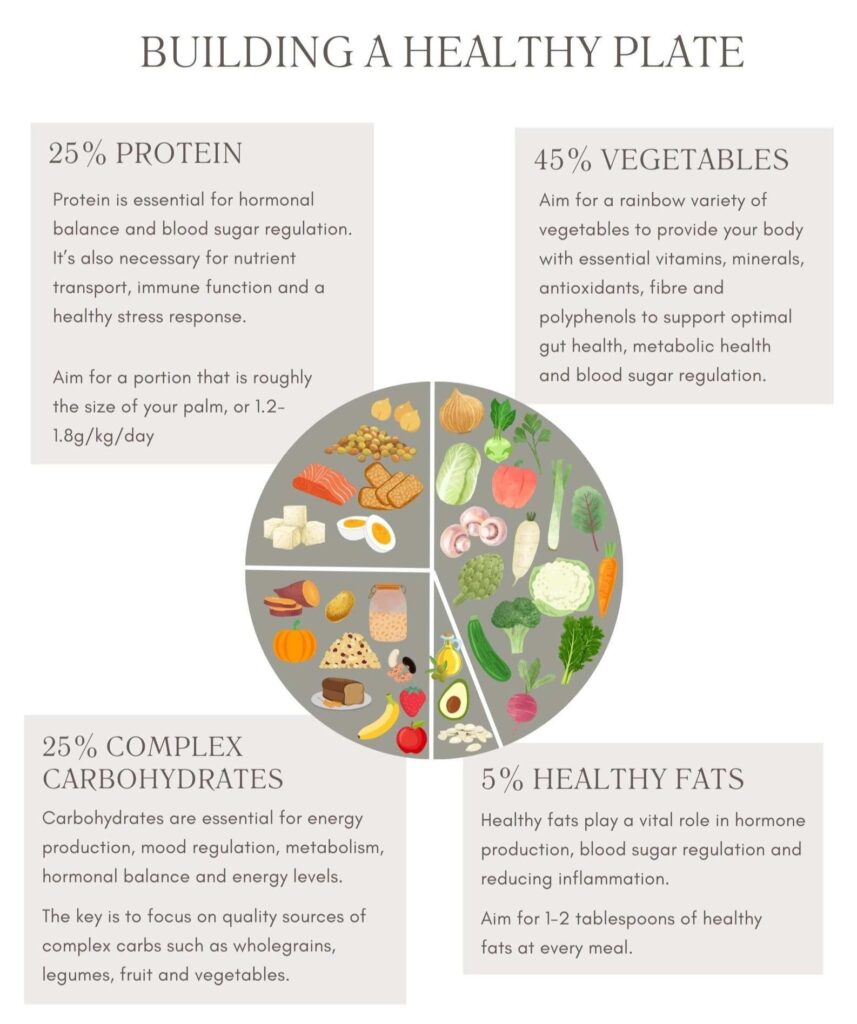
Aim to eat until you’re just full at most meals (not overfull), and balance your plate with:
- ½ plate vegetables (can have fruit at breakfast)
- ¼ plate lean protein (legumes, tofu, eggs, fish, or chicken)
- ¼ plate whole carbohydrates (ie whole grains, starchy veges)
- A small (thumb sized) serving of healthy fats
You can adapt this guideline anywhere – making healthier choices easy!
We’ve included a visual guide below to help too.
3. Be Mindful of Snacking
Snacking can add up quickly—especially when driven by boredom, stress, or fatigue – and snacks are often the most processed/least healthy part of many peoples diets.
Ideally you want to eat enough food at meals that you feel full between most meals, unless you’re very active, or have been exercising.
Feeling consistently hungry between meals can often indicate you aren’t eating enough or balancing your plate (lack of protein is a common cause); it can also be an indication of unstable blood sugar levels, lack of sleep, or a nutrient deficiency.
If you need to have a snack:
- Choose whole, nutrient-dense options rather than packaged ultra-processed snacks where possible.
- Include protein and healthy fats for satiety.
For more tips on how to choose healthy snacks (when life is busy), please check out our blog post here; we also have an article on food cravings here.
4. Consider When You Eat
Eating within a 10–12 hour window (instead of grazing all day) may help:
- Improve blood sugar control
- Support metabolic health
This is an emerging area, but promising, and many women may find it helpful, in addition to the healthy eating principles we’ve covered above.

Exercise: The Most Powerful Tool You Have
Exercise is essential—not optional—during menopause.
But the type of exercise matters, and more isn’t always better….
The ideal combination of exercise (according to research), is a mix of resistance training, cardio, small amounts of higher intensity exercise, as well as daily incidental movement to avoid long periods of sitting.
Here’s why:
Resistance Training (Non-Negotiable)
This is the most important form of exercise during menopause, regardless of your age.
It helps:
- Build and preserve muscle
- Improve metabolism
- Enhance insulin sensitivity
- Support bone health
Even starting later in life is highly effective – it’s never too late.
Hint – If you’re new to resistance training, it’s often a good idea to see a personal trainer for personalised advice, or follow online exercise programs specific to peri/menopausal women, to avoid injury and ensure you’re doing the right things. Gym workouts aimed at 20 year old men don’t tend to work as well for women 40+…
Cardiovascular Exercise
Cardio is also important, as it helps to:
- Reduce body fat
- Improve heart health
- Boost overall fitness
Studies show the most effective workout regimes for women 40+ combine a mix of resistance and cardio.
HIIT (Optional but Effective)
High-intensity interval training can be particularly effective for:
- Reducing abdominal fat
- Improving metabolic health
Some research suggests short bursts of HIIT are even more effective for this than longer moderate intensity cardio workouts – plus they’re great if you’re short on time!
Cycle based HIIT (such as spin classes) may be particularly beneficial for women after menopause, as they are lower impact with less risk of injury.
How Much Do You Need?
Ideally, you want to aim for:
- 150–300 minutes/week moderate activity (zone 2-3, where you are a bit short of breath but can still talk, such as brisk walking, hill walks, swimming or cycling)
- 2–3+ strength sessions/week:
- working all main muscle groups (ie lower body one day, upper body another, plus core)
- aiming for progressive overload (doing each exercise to the point of fatigue)
- 3 short 15 minute HIIT sessions/week if able, such as:
- 60 repetitions of 8 seconds at 80-90% peak heart rate with 12 seconds active recovery,
- 3 minutes at 80-90% maximum heart rate followed by 3 minutes of moderate exercise at 55-65% maximum heart rate
More movement generally leads to better results—there’s a clear dose-response effect.
(If you have any pre-existing injuries or health issues, always consult with your health provider before starting a new exercise program though, to ensure it is safe for you.)
Don’t Forget Daily Movement
Long periods of sitting negatively impact metabolism.
Simple changes matter:
- Break up sitting time.
- Walk more
- Take the stairs
Every little bit counts, especially when you’re busy!

Sleep: Your Metabolic Reset Button
Sleep is one of the most underrated factors in managing weight during perimenopause and menopause. Both how long you sleep and how well you sleep can directly influence your appetite, energy levels, and overall progress.
Not getting enough sleep can increase hunger, cravings (especially for sugary or high-energy foods), and make it harder to stay active and make balanced choices.
On the other hand, improving sleep—particularly if you’re a short sleeper—can naturally help you regulate appetite better, reduce sugar cravings, and support sustained weight loss over time.
Interestingly, more sleep isn’t always better. The sweet spot for most people appears to be around 7–8 hours per night, with both very short and very long sleep linked to less successful weight outcomes.
Sleep quality matters just as much as duration too. Frequent waking, difficulty falling asleep, or restless nights are all associated with reduced weight loss success and lower motivation for physical activity.
Try Improve Your Sleep By:
- Keeping a consistent routine
- Creating a cool, dark sleep environment
- Limiting screens before bed
- Reducing caffeine
Prioritising consistent, good-quality sleep can make a real difference. Simple habits like a regular bedtime, limiting screens at night, and creating a calm sleep routine can support better energy, appetite control, and long-term weight management.
For more tips on sleep check out our article. We also teach you all you need to know about sleep, how to fix common sleep issues, how sleep impacts on health and wellbeing, and ways to get a better nights sleep in our Reboot and Sleep courses – so please check them out if you’d like to know more!

Managing Stress Is Key
Stress can quietly work against your weight goals during perimenopause and menopause. It affects both your mind and body, making it harder to stay consistent with healthy habits.
When stress levels are high, it can reduce focus and decision-making, leading to more emotional or impulsive eating. It’s also linked to lower physical activity, increased cravings (especially for convenience or comfort foods), and changes in hormones that influence hunger, fat storage, and metabolism. Over time, this can make weight gain—particularly around the midsection—more likely.
The good news is that managing stress can support your weight efforts. Techniques like deep breathing, relaxation exercises, and gentle movement have been shown to improve eating behaviours and support modest weight loss. Including stress management in weight loss programs can significantly help reduce emotional eating and food cravings, further supporting sustainable weight management.
While approaches like mindfulness can be effective for reducing stress, their direct impact on weight may be less consistent—but they still play an important role in overall wellbeing.
It’s also worth noting that stress and mood are closely connected. Ongoing stress can contribute to low mood or emotional fatigue, which may further impact motivation and progress.
You don’t need to eliminate stress completely—but building simple, regular stress-management habits can make it much easier to stay on track with nutrition, movement, and long-term weight goals.
Helpful Strategies Can Include:
- Daily movement you enjoy
- Time in nature
- Breathing exercises or meditation
- Setting boundaries and reducing overload
- Eating regular balanced meals to help with steady energy and mood
- Prioritising quality sleep and time for relaxation
- Seek support and share your feelings and experiences with friends, family, or a support group.
Even small daily practices can have a big impact!
Menopausal Hormone Therapy (MHT): Clearing Up the Myth
One of the biggest misconceptions is that hormone therapy causes weight gain.
However in most women, it doesn’t.
In fact, evidence shows MHT may:
- Reduce abdominal fat accumulation
- Improve insulin sensitivity
- Support sleep and mood
While it’s not a weight loss treatment, it can make weight management easier by improving underlying symptoms.
If you’re struggling, it’s worth discussing with your doctor.
Medical Help Is Sometimes Needed
For some women, lifestyle changes alone aren’t enough, especially if there are underlying metabolic issues, or other health conditions/medications that are playing a role.
Evidence-based options (such as certain weight loss medications) may be appropriate to consider (alongside dietary and lifestyle strategies) when:
- Weight gain is significant (usually BMI >30, or >29 with medical complications)
- Metabolic dysfunction is present (ie prediabetes/diabetes, metabolic syndrome)
- Progress is minimal despite consistent effort
These should always be guided by a healthcare professional and combined with lifestyle strategies; ideally weight loss medications should be used as a metabolic tool to improve health, not for purely cosmetic reasons.

Don’t Underestimate Social Support
Our social networks can have a powerful—yet often overlooked—impact on weight during perimenopause and menopause.
It’s not just about how many people you’re connected to, but the quality and influence of those relationships.
Research shows that women with limited social interaction, isolation, or more negative relationships tend to have higher rates of weight gain, particularly around the abdomen.
On the flip side, supportive, positive connections can make a meaningful difference. Encouragement from friends, family, or even coworkers—especially around healthy eating and physical activity—has been linked to better weight management outcomes.
Interestingly, bigger social circles aren’t always better. Smaller, more supportive networks often lead to greater success, while environments where unhealthy habits are the norm can make change much harder – especially when this involves family members who are not supportive.
When it comes to maintaining weight loss, support matters even more. People who have encouragement through shared actions – such as exercising together or cooking healthy meals – are more likely to keep weight off long-term, than those who are just given advice or reminders.
Takeaway: Focus on building a circle that supports your goals. Whether it’s a walking buddy, a supportive partner, or a like-minded community, the right social environment can make healthy changes feel easier—and more sustainable.

Wrapping it up
Weight gain during menopause is real—but it’s not inevitable, and it’s not your fault.
Your body is adapting to:
- Hormonal changes
- Metabolic shifts
- Muscle loss
- Changes in fat distribution
The key is not doing more—but doing what works:
✔ Strength-focused exercise
✔ Balanced, protein-rich nutrition
✔ Quality sleep
✔ Stress management
✔ Medical support when needed
With the right approach, you can navigate this phase feeling strong, energised, and in control of your health.
The Japanese word for menopause is ‘Konenki’ – which translates roughly to regeneration, years, and season or energy. It refers to a time of renewal during mid-life years, bringing a sense of new purpose and growth.
It is not seen as a time to mourn what has occurred in the past, but a time to embrace the future possibilities.
Menopause doesn’t have to be a negative experience – instead can be a perfect time to reassess your priorities and goals, focus on your own health again, and start to live for your future health and the life you want!
And if you feel like you need some extra support, knowledge or guidance with this, we can help you ❤️
We offer wraparound support with our 10 week signature Reboot Transformation health course, where you’ll learn how to take a holistic evidence based approach to well-being, and receive personalised support and coaching to help you turn your health around.
We also run regular live challenges, including our 30 day Nutrition Reset; our 30 Day Metabolic Reset For Women; and our 14 day Sugar Challenge (with optional CGM).
Please check out our course page to see current live challenges, and sign up to our newsletter to be the first to hear when our next one is live!
We also do in depth perimenopause, menopause, weight holistic weight management and lifestyle medicine consults New Zealand wide, for people who need more in depth advice and input with their health.
Whatever your needs, we’d love to help you – so flick us an email if you have any questions – it’s our passion to help people on their journey to better well-being!
EXTRA REFERENCES
Guo-Chong Chen and others, Association between regional body fat and cardiovascular disease risk among postmenopausal women with normal body mass index, European Heart Journal, Volume 40, Issue 34, 7 September 2019, Pages 2849–2855, https://doi.org/10.1093/eurheartj/ehz391
Hoffman BL, et al. Menopausal transition. In: Williams Gynecology. 4th ed. McGraw-Hill; 2020. https://accessmedicine.mhmedical.com. Accessed July 20, 2023.
Changes in weight and fat distribution. North American Menopause Society. https://www.menopause.org/for-women/sexual-health-menopause-online/changes-at-midlife/changes-in-weight-and-fat-distribution. Accessed July 20, 2023.
Christakis MK, Hasan H, De Souza LR, Shirreff L. The effect of menopause on metabolic syndrome: cross-sectional results from the Canadian longitudinal study on Aging. Menopause.2020;27:999-1009
Abildgaard J, Ploug T, Al-Saoudi E et al. Changes in abdominal subcutaneous adipose tissue phenotype following menopause is associated with increased visceral fat mass. Sci Rep.2021;11:14750
Kate M. Bermingham, Inbar Linenberg, Wendy L. Hall, Kirstin Kad et al. Menopause is associated with postprandial metabolism, metabolic health and lifestyle: The ZOE PREDICT study. eBioMedicine 2022;85: 104303 Published online 18 October 2022 https://doi.org/10.1016/j. ebiom.2022.104303
Davis SR, Castelo-Branco C, Chedraui P, Lumsden MA, Nappi RE, Shah D, Villaseca P; Writing Group of the International Menopause Society for World Menopause Day 2012. Understanding weight gain at menopause. Climacteric. 2012 Oct;15(5):419-29. doi: 10.3109/13697137.2012.707385. PMID: 22978257.
Schreurs MPH, de Vos van Steenwijk PJ, Romano A, Dieleman S, Werner HMJ. How the Gut Microbiome Links to Menopause and Obesity, with Possible Implications for Endometrial Cancer Development. J Clin Med. 2021 Jun 29;10(13):2916. doi: 10.3390/jcm10132916. PMID: 34209916; PMCID: PMC8268108.
Peters BA, Santoro N, Kaplan RC, Qi Q. Spotlight on the Gut Microbiome in Menopause: Current Insights. Int J Womens Health. 2022 Aug 10;14:1059-1072. doi: 10.2147/IJWH.S340491. PMID: 35983178; PMCID: PMC9379122.
Lovejoy J, Champagne C, de Jonge L, Xie H, Smith S. Increased visceral fat and decreased energy expenditure during the menopausal transition. Int J Obes (Lond). 2008;32(6):949-958.
Greer SM, Goldstein AN, Walker MP. The impact of sleep deprivation on food desire in the human brain. Nat Commun. 2013;4(1):2259.
Kodoth V, Scaccia S, Aggarwal B. Adverse changes in body composition during the menopausal transition and relation to cardiovascular risk: a contemporary review. Women’s Health Reports. 2022;3(1):573-581.
Kapoor E, Collazo-Clavell ML, Faubion SS. Weight gain in women at midlife: a concise review of the pathophysiology and strategies for management. Mayo Clin Proc. 2017;92(10):1552-1558.
McCormick R, Vasilaki A. Age-related changes in skeletal muscle: changes to life-style as a therapy. Biogerontology. 2018;19(6):519-536.
Oikawa SY, Holloway TM, Phillips SM. The impact of step reduction on muscle health in aging: protein and exercise as countermeasures. Front Nutr. 2019;6:75.
Cardiovascular Disease and Diabetes. American Heart Association. Accessed 03/03/2023.
Mao T, Huang F, Zhu X, et al. Effects of dietary fiber on glycemic control and insulin sensitivity in patients with type 2 diabetes: A systematic review and meta-analysis. Journal of Functional Foods, 2021;82:104500.
Kapoor E, Files JA, Faubion SS. Management of weight gain in midlife women: hormone therapy and beyond. J Women’s Health. 2017;26(4):396-398. doi:10.1089/jwh.2017.6324
Grant LK, Coborn JE, Cohn A, et al. Effect of experimentally induced sleep fragmentation and hypoestrogenism on fasting nutrient utilization in pre-menopausal women. J Endocrine Society. 2021;5(Suppl 1):A774–A774. doi:10.1210/jendso/bvab048.1575
Abdulnour J, Doucet E, Brochu M, et al. The effect of the menopausal transition on body composition and cardiometabolic risk factors: a Montreal-Ottawa New Emerging Team group study. Menopause. 2012;19(7):760-767. doi:10.1097/gme.0b013e318240f6f3
Chopra S, Sharma KA, Ranjan P, Malhotra A, Vikram NK, Kumari A. Weight management module for perimenopausal women: a practical guide for gynecologists. J Midlife Health. 2019;10(4):165-172. doi:10.4103/jmh.JMH_155_19
Alley SJ, Schoeppe S, Rebar AL, Hayman M, Vandelanotte C. Age differences in physical activity intentions and implementation intention preference. J Behav Med. 2018;41(3):406-415. doi:10.1007/s10865-017-9899-y
Bonanno L, Metro D, Papa M, et al. Assessment of sleep and obesity in adults and children: observational study. Medicine (Baltimore). 2019;98(46):e17642. doi:10.1097/MD.0000000000017642
Kozakowski J, Gietka-Czernel M, Leszczyńska D, Majos A. Obesity in menopause—our negligence or an unfortunate inevitability? Prz Menopauzalny. 2017;16(2):61-65. doi:10.5114/pm.2017.68594
Cordola H, Amber R, Ames SL, et al. Incidence of diabetes according to metabolically healthy or unhealthy normal weight or overweight/obesity in postmenopausal women: the Women’s Health Initiative. Menopause. 2020;27(6):640-647. doi:10.1097/GME.0000000000001512
El Khoudary SR, Aggarwal B, Beckie TM, et al. Menopause transition and cardiovascular disease risk: implications for timing of early prevention: a scientific statement from the American Heart Association. Circulation. 2020;142:e506–e532. doi:10.1161/CIR.0000000000000912
Penn Medicine. Menopause might not be the culprit for weight gain as women age.
Lombardo M, Perrone MA, Guseva E, et al. Losing weight after menopause with minimal aerobic training and Mediterranean diet. Nutrients. 2020;12(8):2471. doi:10.3390/nu12082471
Harvard Health Publis
hing. Menopause makeover.
Mishra N, Mishra VN, Devanshi. Exercise beyond menopause: dos and don’ts. J Midlife Health. 2011;2(2):51-56. doi:10.4103/0976-7800.92524
National Institute of of Arthritis and Musculoskeletal and Skin Diseases. Exercise for your bone health.
Ford C, Chang S, Vitolins MZ, et al. Evaluation of diet pattern and weight gain in postmenopausal women enrolled in the Women’s Health Initiative Observational Study. Br J Nutr. 2017;117(8):1189-1197. doi:10.1017/S0007114517000952